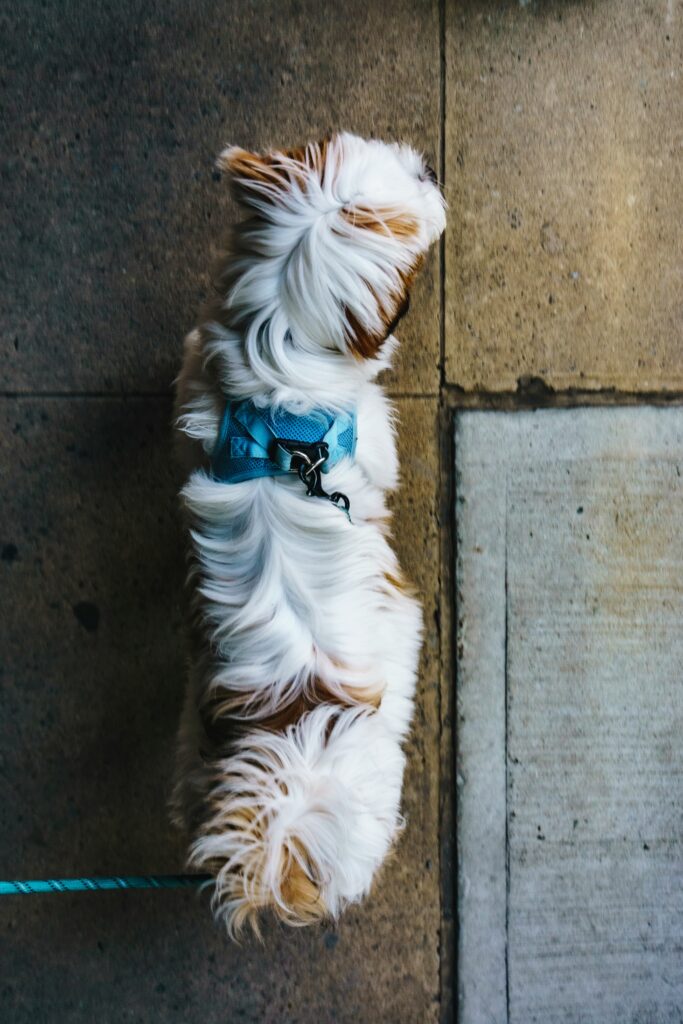
A guardian stands on a busy city sidewalk, their dog lunging and barking at a passing cyclist. Pedestrians glare. The guardian’s face flushes with embarrassment and frustration. “Why can’t you just behave?” they mutter, shortening the leash.
But what if I told you the real question isn’t “What’s wrong with this dog?”
What if the real question is: “What have we done to dogs’ lives in the last century?”
I’m a Family Dog Mediator, and my work centers on one fundamental truth: there are no problem behaviors, only unmet needs. But to understand why so many dogs are struggling in our modern world, we need to look backward. We need to see how dramatically—and how recently—we’ve transformed every aspect of dogs’ existence.
Let me take you on a journey through time. What you’ll discover might completely shift how you see your dog’s “problems.”
1900s: The Working Partnership Era
A hundred years ago, dogs had jobs. Real jobs. Jobs that aligned with thousands of years of selective breeding.
The Border Collie spent her days moving sheep across hillsides, her herding genetics fulfilled through constant problem-solving and physical work. The Beagle followed his nose through fields, tracking rabbits—exactly what his scent hound blueprint was designed for. The Livestock Guardian Dog patrolled the perimeter of the farm at night, making independent decisions about threats, sleeping during the day.
Here’s what that world looked like through the L.E.G.S. framework:
Learning: Dogs learned through real-world experience and natural consequences. The herding dog learned to read sheep, to adjust pressure, to make split-second decisions. No one was drilling “sit” for treats in the living room.
Environment: Most dogs lived outdoors or had constant outdoor access. They had space, autonomy, and choice. They decided when to rest, when to explore, when to engage. Their environments were complex, ever-changing, and rich with species-appropriate stimuli.
Genetics: This is the critical piece—dogs’ genetic blueprints were being honored. A scent hound got to use that incredible nose for hours every day. A terrier got to hunt vermin. A retriever retrieved actual birds. Their DNA hummed with satisfaction.
Self: Dogs had agency. Individual temperament mattered less when dogs could self-select their activities, manage their own arousal levels, and live in ways that matched their personalities.
Many dogs lived in multi-dog households or as part of loose neighborhood packs. They had canine social structures, learned dog communication from other dogs, and navigated social complexity daily.
Were these dogs “trained”? Not in our modern sense. But they were fulfilled, purposeful, and rarely showed the behavior issues we see epidemic in today’s world.
1970s: The Suburban Transition Begins
Fast forward to the 1970s. The shift had begun, but dogs still had breathing room—literally.
Suburban sprawl meant most dogs still had yards. Leash laws were becoming common, but dogs often had neighborhood social networks. Your dog might have had dog friends who came over, or you might have known which yards your dog visited.
Dogs were transitioning from “working animals” to “family pets,” but the change was gradual. Many families still chose breeds somewhat intentionally—the family with acres of land might get a German Shepherd or Golden Retriever. Working breed genetics were still relatively common in working contexts.
The L.E.G.S. analysis:
Learning: Dogs were learning more from humans, less from work and other dogs. Obedience training was becoming more common, but it wasn’t yet the dominant paradigm.
Environment: Yards provided a buffer. Dogs could still be dogs—they could patrol, they could sniff, they could choose to be inside or outside. The environment was controlled but not completely constrained.
Genetics: Here’s where the first cracks appeared. Dogs were being bred more for appearance than function. That backyard wasn’t a sheep farm, so the Border Collie’s genetics started going unmet. But the impact was cushioned by space and relative freedom.
Self: Dogs still had some autonomy. They could choose to be in the sun or shade, to dig a hole or not, to bark at the mail carrier from the safety of their territory.
The seeds of our current crisis were planted, but they hadn’t yet germinated into the epidemic we see today.
2000s: The Acceleration
Welcome to the early 2000s, where everything started moving faster.
Urban density increased dramatically. Dogs in apartments became normalized—even expected. The rescue movement exploded with dogs from all backgrounds flooding into homes that bore no resemblance to what their genetics prepared them for.
Herding breeds from rural shelters landed in third-floor walkups. Street dog survivors from other countries arrived in cities with sensory input that would overwhelm any nervous system. Scent hounds who should be tracking for hours daily were expected to be content with three 15-minute leash walks around the block.
Training culture shifted hard toward obedience. “A tired dog is a good dog” became gospel, but we measured “tired” in miles walked, not in whether genetic needs were met. We didn’t yet understand that for a scent hound, the smelling makes them tired, not the walking itself.
The L.E.G.S. reality:
Learning: Dogs were being trained more than ever—but we were teaching “sit,” “stay,” and “heel” instead of providing opportunities for breed-specific learning. We were filling their days with our agenda, not theirs.
Environment: Yards were disappearing. Dogs spent more time indoors, in controlled spaces, with decreasing autonomy. Every bathroom break became a managed event.
Genetics: This is where the wheels really started coming off. Dogs with genetics for independent livestock guarding were expected to walk calmly on leash through crowds. Terriers with genetics for hunting had nothing to hunt. Herding breeds had nothing to herd. We expected them to simply… not need what they were bred for.
Self: Individual temperament began showing more dramatically because the environment left no room for dogs to self-regulate or opt out. Anxious dogs couldn’t remove themselves from situations. Bold dogs couldn’t express that boldness appropriately.
“Enrichment” entered our vocabulary during this era, but it was still a secondary thought. The primary goal remained obedience and control.
Now: The Urban Crisis We’re Living In
Now let’s arrive in the present day. Let me paint you a picture of what “normal” looks like for many modern urban dogs.
A Cattle Dog lives on the 14th floor of a high-rise in downtown. His genetic blueprint screams at him to move stock, to make independent decisions, to work for hours covering miles of terrain. Instead, he’s carried down in an elevator four times a day for bathroom breaks, walked on a 6-foot leash past dozens of triggers, and expected to be neutral to all of it.
A street dog survivor from Korea—a dog who spent months making independent survival decisions, reading environmental cues, and relying on her own instincts—is now expected to check in with her human for every single decision. She has zero autonomy. She’s surrounded by novel stimuli at every turn, with no ability to control her own exposure.
A Beagle, whose nose is literally 10,000 to 100,000 times more sensitive than ours and who was bred to follow scent trails for hours, gets three 20-minute walks daily where he’s corrected every time he stops to smell something.
Here’s the modern L.E.G.S. reality:
Learning: Dogs are trained constantly—but we’re teaching compliance, not fulfillment. We’re drilling obedience in the same living room, day after day. The learning is repetitive, human-focused, and disconnected from what dogs were designed to do.
Environment: Dogs live in environments that bear zero resemblance to what their species needs. They’re surrounded by triggers they can’t escape: sounds from neighboring apartments, people and dogs passing outside windows, delivery drivers, cyclists, skateboarders. They have no agency over their exposure to any of it.
Every single moment outside is managed. Every bathroom break is an opportunity for trigger stacking. The environment provides none of the complexity, choice, or species-appropriate challenge dogs need.
Genetics: This is the heart of the crisis. We have dogs whose genetic blueprints were written over hundreds or thousands of years—blueprints for herding, hunting, guarding, retrieving, going to ground after prey—and we’re asking them to be content with… what exactly? A stuffed Kong? A training session where we practice the same behaviors they already know?
Self: There is no self. There is no autonomy. There is no choice. Modern urban dogs live entirely managed lives. They don’t decide when to eat, where to eliminate, when to rest, when to be active, or whether to engage with a trigger or create distance from it.
And here’s the kicker: We expect them to be “neutral” to everything. A “good dog” has become synonymous with an “invisible dog”—one who exists in public spaces without expressing any opinions, needs, or discomfort.
The Revelation: It’s Not That Dogs Got Worse
Let that sink in for a moment.
In just 100 years—a blink in evolutionary time—we’ve transformed dogs from purposeful, autonomous, fulfilled beings into managed dependents living in environments completely mismatched to their needs.
And then we call their completely reasonable responses “behavior problems.”
The dog who lunges on leash? He’s desperately trying to communicate about triggers he can’t escape while looking to you for information about how to respond—and we’re not giving him clear communication.
The dog who’s “destructive”? She’s trying to fulfill genetic needs through the only outlets available in a 900-square-foot apartment.
The dog who barks at sounds in the hallway? He’s a guardian breed doing exactly what his genetics tell him to do—alert to novel stimuli in his territory—but his territory is now a thin-walled box where novel stimuli never stop.
There are no problem behaviors. Only unmet needs.
My rescue dog Rei is a Korean street dog survivor. He spent months making independent survival decisions, reading his environment, trusting his instincts. Now he lives in my home, and every day I’m aware of how much I’m asking of him. I’m asking him to trust my decisions about what’s safe. I’m asking him to stay regulated in an environment with constant triggers. I’m asking him to suppress instincts that kept him alive.
Is it any wonder that reactivity is epidemic? That separation anxiety is skyrocketing? That “behavior problems” seem to be the norm rather than the exception?
We didn’t breed dogs who can’t handle modern life. We created a modern life that dogs can’t handle.
So What Do We Do?
Here’s where I refuse to leave you hanging with just the problem. Because while we can’t turn back time, we can shift our entire paradigm.
First, we stop labeling and start listening. Every behavior is communication. Every “problem” is information about an unmet need.
Second, we honor genetics. Stop trying to train away breed-specific needs and start fulfilling them. Your scent hound needs to smell—really smell, for extended periods, using that incredible nose. Your herding breed needs to problem-solve and make decisions. Your terrier needs to dig and “hunt.” Your guardian breed needs to feel like their vigilance is valued, not suppressed.
Third, we prioritize environment and management over training. Before you drill another “sit,” ask: Does my dog’s environment support their nervous system regulation? Can they create distance from triggers? Do they have choice and agency anywhere in their day?
Fourth, we provide clear communication. Dogs are looking to us for information about how to respond to their environment. When we hide from triggers or tiptoe around them, we create more uncertainty. When we provide early, clear, consistent verbal cues, we help them understand how to navigate their world.
Finally, we adopt a whole-family systems approach. Your dog is a barometer of family dynamics, stress levels, and communication patterns. They’re not a training project to be fixed in isolation.
The Bottom Line
One hundred years ago, dogs’ lives made sense within the context of their genetics, their needs, and their species-appropriate behaviors. Today, we’ve created a world where those same genetics, needs, and behaviors are labeled as problems.
But the problem isn’t the dog. The problem is the profound mismatch between who dogs are and what we’re asking them to be.
The urban shift didn’t just change where dogs live. It turned their entire world upside down.
And until we acknowledge that—until we stop trying to train dogs to be okay with environments and expectations that would dysregulate any sentient being—we’re going to keep seeing the same “behavior problems” proliferate.
Because they’re not behavior problems at all.
They’re distress signals from beings trying to survive in a world that no longer makes sense.
Ready to navigate this urban dog dilemma with practical, compassionate solutions?
If this article resonated with you, my book “The Urban Dog Dilemma: A Genetic Guide to City Living” goes deeper into exactly how to honor your dog’s needs in today’s world.
Inside, you’ll discover:
- How to fulfill breed-specific genetics in small spaces
- Practical management strategies that actually work in urban environments
- Communication techniques that help your dog feel safe and understood
- The whole-family systems approach to behavior support
- Real stories from dogs navigating the urban crisis (including Rei’s journey)
Because understanding the problem is just the first step. The Urban Dog Dilemma gives you the roadmap for what comes next.



Leave a Reply