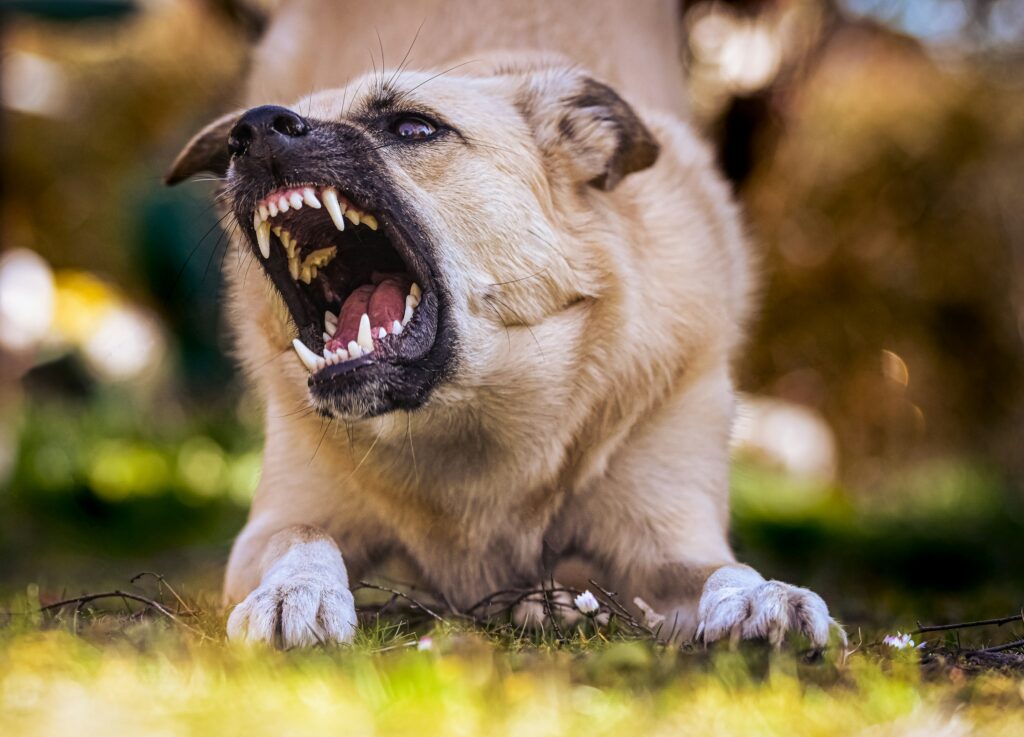
When your dog lunges, barks, or freezes at the sight of another dog, a person, or a trigger in the environment, it’s easy to feel like you’re dealing with a “problem behavior” that needs to be fixed. But what if I told you that reactivity isn’t a problem at all? What if, instead, it’s communication—your dog’s way of telling you about an unmet need, an overwhelming feeling, or a genetics-based response they can’t simply turn off?
As a Family Dog Mediator, I see reactivity not as something broken in your dog, but as a window into their inner world. Understanding the hows and whys of reactivity—and learning to manage rather than “fix” it—can transform not just your dog’s experience, but your entire relationship with them.
What Reactivity Really Is
Reactivity is an overreaction to a stimulus in the environment. It looks like lunging, barking, growling, spinning, or even freezing when your dog encounters a trigger—whether that’s other dogs, people, bikes, skateboards, or anything else that activates their nervous system.
But here’s what’s crucial to understand: reactivity is not aggression, though it can look similar. It’s not dominance. It’s not your dog being “bad” or “stubborn.” Reactivity is a nervous system response—a dog communicating that they feel overwhelmed, scared, frustrated, or unable to cope with what they’re experiencing in that moment.
Think of it like a smoke alarm. When the alarm goes off, we don’t get mad at the alarm for being too sensitive. We recognize it’s doing its job—alerting us to something that needs our attention. Your dog’s reactive behavior is their alarm system, telling you they need help managing what they’re feeling.
The Four Pillars of Why Reactivity Happens
To truly understand reactivity, we need to look at the whole dog, not just the behavior. This is where the L.E.G.S.® framework (Learning, Environment, Genetics, Self), developed by Kim Brophey, becomes essential. Reactivity never has just one cause—it’s always a combination of factors working together.
Learning: Past Experiences and Trauma
Every dog comes to us with a history, and that history shapes how they see the world. For rescue dogs, particularly street dog survivors, their learning history may include:
- Negative experiences with other dogs or people
- Lack of positive socialization during critical developmental periods
- Traumatic events that created lasting associations
- Learned patterns of behavior that once kept them safe
My own dog, Rosco, is a perfect example. We adopted him from a rescue when he was less than 20 weeks old, but he came to us with medical issues and inadequate socialization during those critical early weeks. He’s been an anxious dog right from the start. His limited positive experiences during his developmental period created powerful associations, and his anxiety means his nervous system is already primed to perceive threats. Those neural pathways run deep, and building new, positive associations takes patience and time—often much more time than we expect.
It’s important to understand that trauma-based learning creates powerful associations. When a dog has learned that certain situations are dangerous, their brain automatically prepares them to respond before they can even think about it. This is not a choice—it’s how mammalian brains work.
Environment: The Context That Matters
The environment isn’t just the physical space around your dog—it’s the entire context in which behavior happens. Environmental factors that influence reactivity include:
- Physical environment: Urban settings with close quarters, narrow sidewalks, constant stimulation, and little escape space naturally increase stress and reactivity
- Social environment: The emotional state of the household, tension between family members, or changes in routine all affect your dog
- Trigger stacking: Multiple small stressors throughout the day that build up until one final trigger causes a reaction
- Threshold management: How close your dog is to their triggers and whether they have enough distance to feel safe
I often say that dogs are emotional barometers for their family systems. When household stress is high, reactivity often increases. When we create calm, predictable environments with appropriate distance from triggers, we see improvement.
The urban environment presents unique challenges. In cities, dogs encounter triggers at close range with little warning and no escape route. A dog who might be fine with another dog at 50 feet becomes reactive at 10 feet on a narrow sidewalk. This isn’t a training failure—it’s a space and distance issue.
Genetics: The Blueprint That Matters
This is where conventional training often gets it completely wrong. Many trainers treat all dogs the same, expecting every dog to be friendly, social, and tolerant of everything. But genetics matter enormously.
Different breed groups, identified in Kim Brophey’s 10 breed group system, have fundamentally different needs, communication styles, and behavioral tendencies:
- Guardian breeds (Livestock Guardians, Mastiffs) are bred to be suspicious of novelty and to bark as communication—asking them to be silent and friendly with strangers goes against their genetic blueprint
- Terriers were bred for intense focus and tenacity—their reactivity often stems from frustrated hunting drive
- Herding breeds are motion-sensitive and bred to control movement—bikes, joggers, and quick movements can trigger their genetics
- Northern breeds often have high dog selectivity bred into them—they’re not “broken” for being selective about dog friends
- Scenthounds and Sighthounds have prey drive that can look like reactivity when triggered
When we understand genetics, we stop trying to make our Livestock Guardian “friendly” with every stranger and instead honor their need to assess situations. We recognize that our terrier’s leash reactivity to squirrels isn’t a behavior problem—it’s genetics screaming to be expressed appropriately.
My dog Rei, a Korean Village Dog (a “world dog”) and street dog survivor, exemplifies how genetics and early learning combine. He’s motion-sensitive and can become reactive to bikes and runners. Add in his survival history on the streets, and you have a dog whose reactivity stems from multiple sources. This isn’t something I can train away—it’s who he is. Instead, I manage his environment, give him appropriate outlets for his needs, and help him learn to disengage from triggers.
Self: The Individual Dog
Finally, we have to consider the individual dog in front of us. Even within the same breed or breed mix, every dog is unique. Self includes:
- Individual temperament and personality
- Current physical health and pain status
- Emotional state and stress levels
- Age and developmental stage
- Capacity for learning in the moment
A dog who’s in pain will be more reactive. A dog who’s overstimulated will have a lower threshold. A dog going through adolescence will have less impulse control. An anxious dog will perceive more threats.
Understanding your individual dog means recognizing their signs of stress, knowing their personal triggers, and respecting their limits on any given day.
Why “Fixing” Reactivity Doesn’t Work
The traditional training approach to reactivity focuses on suppression—teaching the dog to stop barking, stop lunging, stop showing the behavior. This might look like success in the short term, but it often creates bigger problems down the road.
When we suppress reactive behavior without addressing the underlying causes, we’re essentially covering up the smoke alarm without addressing the fire. The dog still feels overwhelmed, scared, or frustrated—they’re just no longer allowed to communicate it. This can lead to:
- Learned helplessness
- Increased anxiety and stress
- Sudden “out of nowhere” aggression when the dog finally can’t contain it anymore
- Shutdown behavior that looks like calmness but is actually emotional flooding
- Damage to the trust relationship between dog and guardian
I learned this lesson through my parenting journey with my twice-exceptional young adult. Trying to suppress or “fix” difficult behaviors without understanding the underlying needs didn’t work—it only created more struggle. The same is true for dogs. When we focus on understanding and supporting rather than controlling and correcting, everything changes.
A Better Approach: Management and Support
Instead of trying to fix reactivity, we manage it while addressing underlying needs. This is a long-term approach that honors the whole dog and builds genuine confidence and coping skills.
Immediate Management Strategies
Create Distance: Distance is your best friend. The farther your dog is from their trigger, the better they can think and learn. Use distance generously—cross the street, turn around, choose different routes and times for walks.
Reduce Trigger Stacking: Pay attention to everything that stresses your dog throughout the day—visitors, loud noises, changes in routine, grooming, vet visits. When possible, spread out stressful events and provide decompression time.
Know Your Dog’s Early Warning Signs: Learn to read your dog’s body language so you can intervene before they go over threshold. Signs include:
- Stiffening or tension in the body
- Hard staring
- Whale eye (showing the whites of their eyes)
- Closed mouth or tight lips
- Raised hackles
- Sudden sniffing or shaking off
- Panting or drooling
When you see these signs, create distance immediately. Don’t wait for the big reaction.
Give Your Dog Choice: Whenever possible, let your dog choose whether to engage with something or move away. Choice reduces stress and builds confidence. This might mean letting your dog turn away from a person who wants to pet them, or allowing them to move at their own pace on a Sniffspot visit.
Long-Term Foundational Work
Address the L.E.G.S. Components:
- Learning: Work with a trauma-informed professional who uses counterconditioning and desensitization at your dog’s pace, never forcing exposure
- Environment: Restructure your dog’s daily life to reduce overall stress—predictable routines, adequate rest, appropriate enrichment
- Genetics: Provide breed-appropriate outlets—let your terrier dig and shred, give your herding dog movement games, allow your guardian to observe from safe spaces
- Self: Address any pain or health issues, ensure adequate rest and recovery time, respect your dog’s individual limits
Build Genuine Confidence: Confidence doesn’t come from forcing a dog through scary situations. It comes from:
- Success experiences at the right level
- Having needs met consistently
- Developing trust that their guardian will advocate for them
- Learning they have choices and their communication is heard
Focus on Relationship: The foundation of everything is your relationship with your dog. When your dog trusts that you’ll keep them safe, that you’ll listen to their communication, and that you’ll advocate for their needs, their nervous system can begin to relax.
What Recovery Actually Looks Like
Here’s something crucial that often surprises people: recovery from reactivity takes much, much longer than conventional training suggests. And it’s not linear.
For dogs with trauma histories or deep-rooted fear, it may take months or even years of consistent support before you see significant change. And even then, your dog may never be “perfectly neutral” to their triggers—that’s okay. The goal isn’t perfection; it’s a dog who can cope, who trusts you, and who experiences less frequent and less intense reactive episodes.
I’ve seen this with Rosco. We adopted him as a young puppy, but his medical issues and lack of proper early socialization, combined with his inherent anxiety, created deep-rooted fear responses. Several years into our journey together, he’s made enormous progress, but he still has reactive moments, especially when his stress level is elevated or we encounter triggers unexpectedly at close range. That doesn’t mean we’ve failed—it means we’re working with his authentic emotional experience and supporting him through it.
You might also find that as your dog begins to feel safer, their behavior initially looks worse before it gets better. When dogs who have been shut down or suppressed finally feel safe enough to express their real feelings, those feelings can be BIG. This is actually progress—it means your dog trusts you enough to be authentic.
The Role of the Whole Family System
Dogs don’t exist in isolation—they’re part of a family system. Often, a dog’s reactivity reflects stress, communication patterns, or dynamics within the household.
I see this clearly in my work as a Family Dog Mediator. When families are in conflict, when communication is unclear, or when stress is high, dogs often become more reactive. They’re not causing the problem—they’re reflecting it.
This means that addressing reactivity often requires looking at the whole family:
- How does your household communicate stress?
- Are there conflicts or tensions affecting the emotional climate?
- Is everyone on the same page about how to support the dog?
- Are the dog’s needs being considered in family decisions?
Sometimes the most powerful intervention isn’t working with the dog at all—it’s helping the family create clearer communication, more consistent routines, and a calmer emotional environment.
Moving Forward with Compassion
Reactivity is not a character flaw in your dog. It’s not something you caused, and it’s not something you need to fix. Your dog is communicating something important—they’re telling you about an unmet need, an overwhelming feeling, or a genetics-based response they’re struggling to manage.
When we shift from trying to fix reactivity to understanding and supporting it, everything changes. We stop seeing our dogs as problems and start seeing them as individuals doing their best with the nervous system, genetics, and learning history they have.
This doesn’t mean giving up or accepting that nothing can improve. It means taking a different path—one that’s slower, more individualized, and focused on building genuine confidence rather than suppressing behavior.
Your reactive dog is not broken. They’re communicating. And with patience, understanding, and the right support, both of you can move forward together—not toward perfection, but toward a relationship built on trust, advocacy, and meeting needs where they are.



Leave a Reply