• Skip to main content
  • Skip to footer

R+R Dog Training and Services

Understanding Before Strategies

  • About
  • Blog
  • The Urban Dog Dilemma
  • Contact

Blog

Why Talking to Your Dog Like a Toddler Actually Works

September 27, 2025 by Jenn Tan Leave a Comment

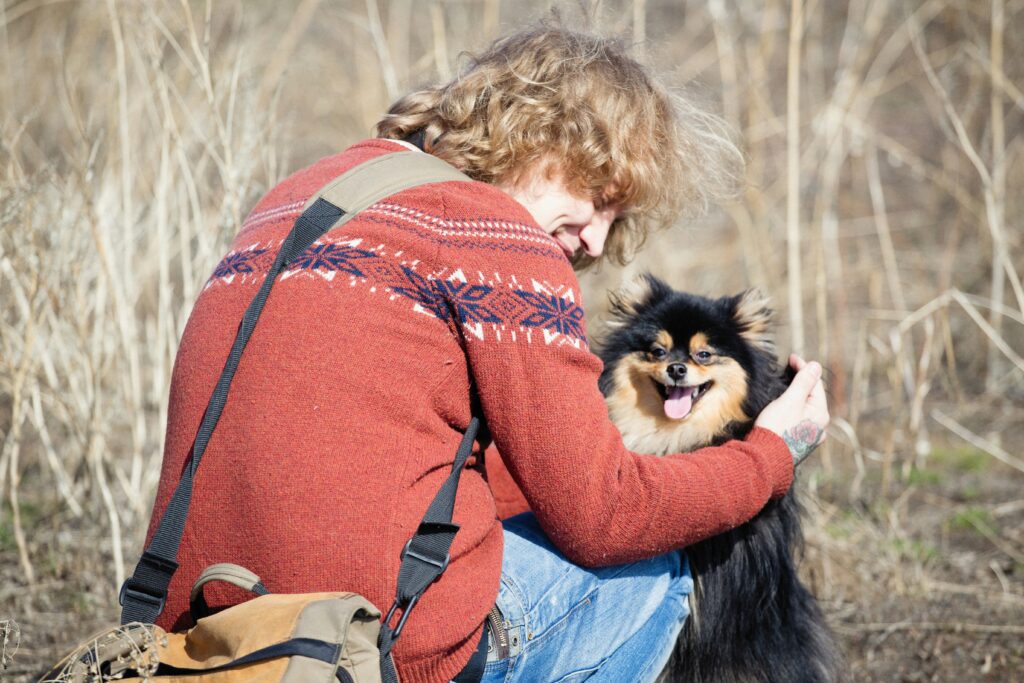
Photo by Alexey Demidov on Unsplash

You know that voice you use with your dog? The one where you ask, “Who’s a good boy? Are you hungry? Should we go outside?” in that sing-song tone that makes you sound slightly ridiculous? Well, science has some great news: you’re not being silly – you’re being smart.

Your dog’s brain loves baby talk

Recent research shows that dogs’ brains literally light up when they hear the high-pitched, melodic way we naturally talk to them. Just like human babies respond better to “parentese” (that exaggerated, musical way we talk to infants), dogs are hardwired to pay attention when we use that same conversational style.

Think about it: when you say “Sit!” in a sharp, commanding tone versus “Would you like to show me a beautiful sit?” in your sweet dog voice, which one gets better results? Most dog parents instinctively know the answer, and now neuroscience backs it up.

Dogs can actually hear much higher pitches than we can, making them incredibly sensitive to the musical qualities of our voices. When we use conversational tones, we’re speaking their preferred language.

It’s all about connection, not control

Here’s what’s fascinating: dogs evolved alongside humans for thousands of years as partners, not servants. They’re naturally wired to cooperate with us, not just obey commands. When we treat training like a conversation rather than a drill session, we tap into that ancient partnership.

Instead of repeatedly shouting “Come!” try something like, “I wonder if you’d like to come see what I have over here? This looks pretty interesting!” You’re giving your dog context, making them a participant in the decision, and showing respect for their intelligence.

Real examples that work

Traditional approach: “No! Down! Stay!”
Conversational approach: “I can see you’re excited about our visitor. Let’s try lying down so you can say a calm hello.”

Traditional approach: “Heel!” (repeated constantly)
Conversational approach: “That’s an interesting smell, isn’t it? Should we check it out together, or keep walking?”

Traditional approach: “Get in the car!”
Conversational approach: “Time for a car ride! I know this part feels tricky, but you’re so brave.”

Notice how the conversational approach acknowledges your dog’s feelings, provides context, and treats them as a thinking partner rather than just a rule-follower.

Why this matters for your relationship

Dogs who receive conversational communication show less stress, learn faster, and have stronger bonds with their humans. They become active participants in their training rather than just trying to avoid making mistakes.

This approach is especially helpful for anxious or sensitive dogs. When you acknowledge their feelings (“I see that noise worried you”) and explain what’s happening (“We’re just going to the vet for a quick check-up”), you help them feel more secure and understood.

Making the switch is easier than you think

You don’t need to throw out everything you’ve learned about training. Simply expand your commands into friendly conversations while keeping the same meaning:

  • “Sit” becomes “Could you show me a sit?”
  • “Stay” becomes “I’ll be right back – can you wait here for me?”
  • “Come” becomes “I’d love for you to come join me over here”

The magic happens when you start explaining things to your dog the way you would to a young child. “After we eat breakfast, we’ll go to the park.” “I know you don’t love baths, but they help you feel clean and comfortable.”

The bottom line

That instinct to chat with your dog isn’t embarrassing – it’s exactly what their brain craves. Dogs are incredibly social, intelligent animals who thrive on communication and connection. When we honor that by treating them as conversation partners rather than command-followers, everyone wins.

So go ahead, explain to your dog why they can’t eat that mysterious sidewalk snack, tell them about your day, and ask them questions in that ridiculous voice. Your dog’s tail-wagging response is proof that you’re doing something very, very right.
Filed Under: Learning

Breed-Specific Urban Success: Tailoring City Life to Your Dog’s Genetics

September 24, 2025 by Jenn Tan Leave a Comment

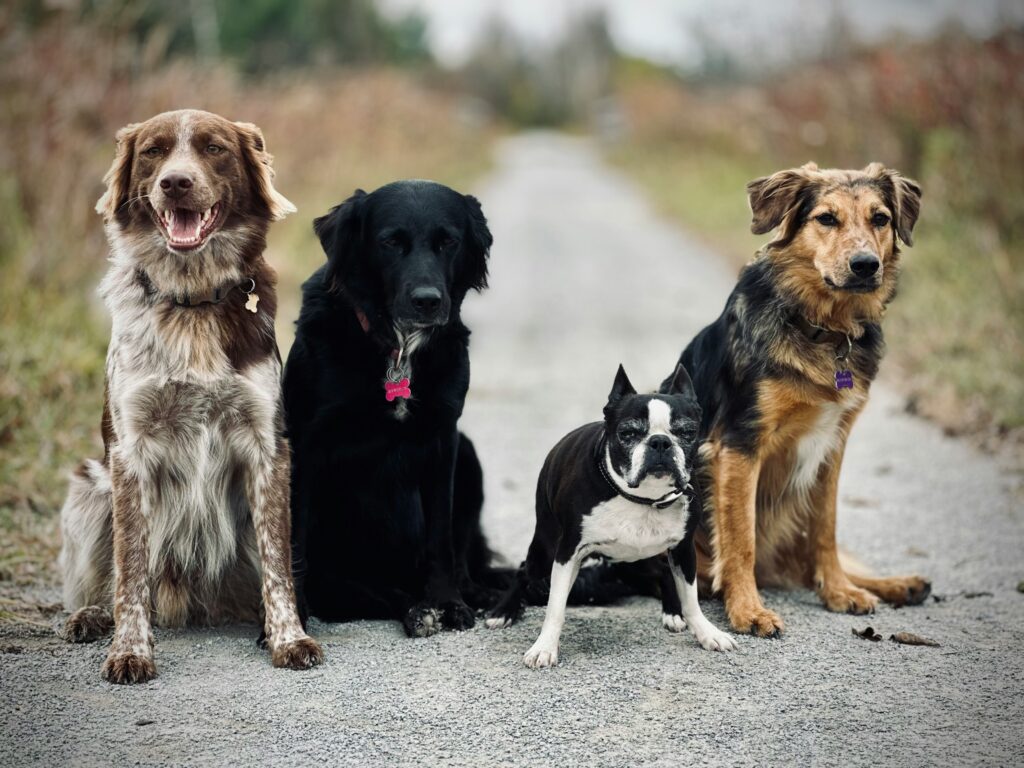
Photo by James Haworth on Unsplash

Why your Border Collie is climbing the walls and your Great Pyrenees thinks every delivery person is a threat—and what to do about it.

Your dog’s biggest challenge in the city isn’t size or training—it’s genetics. Every breed was designed for specific jobs, and those drives don’t disappear in an apartment. When we ignore these built-in needs, we create “genetic frustration”—problem behaviors that are actually your dog trying to do what they were bred for.

Using applied ethologist Kim Brophey’s breed group system, here’s how to honor your dog’s genetics in the city:

Gun Dogs (Labs, Goldens, Pointers)

The Challenge: Bred for all-day hunting, they become destructive without mental work.

City Solutions:

  • Morning puzzle feeding before your coffee
  • “Find it” games in apartment hallways
  • Assign jobs: carry mail, retrieve slippers
  • Seek out water features for psychological needs

Red Flag: Hyperactive after walks? They need mental work, not more exercise.

Herding Dogs (Border Collies, Shepherds, Corgis)

The Challenge: Control-oriented dogs overwhelmed by city chaos.

City Solutions:

  • Predictable daily routines and walking routes
  • Teach them to organize toys by type/color
  • Create “management stations” using furniture
  • Indoor obstacle courses

Red Flag: Excessive barking or nippy behavior means they need more structure.

Guardian Dogs (Great Pyrenees, Mastiffs, Rottweilers)

The Challenge: Hardwired to make security decisions, but cities have constant “threats.”

City Solutions:

  • Train clear “on duty/off duty” commands
  • Provide elevated watching posts
  • Establish visitor protocols
  • Gradual city sound desensitization

Red Flag: Reactive to every sound? They need clearer job descriptions.

Terriers (Jack Russells, Yorkies, Bull Terriers)

The Challenge: Independent hunters redirecting drives toward inappropriate targets.

City Solutions:

  • Hide treats for “hunting” games
  • Provide digging alternatives (snuffle mats, sandbox)
  • Short, intense play sessions
  • Allow some choice in daily routines

Red Flag: Obsessive behavior toward moving objects indicates unmet hunting needs.

Sight Hounds (Greyhounds, Whippets, Salukis)

The Challenge: Sprinters frustrated by leash laws and small spaces.

City Solutions:

  • Find secure areas for safe running
  • Use long hallways for indoor sprints
  • Position beds for safe “people watching”
  • Provide multiple soft resting spots

Red Flag: Restless or depressed? They need speed opportunities.

Scent Hounds (Beagles, Bloodhounds, Bassets)

The Challenge: Nose-driven dogs restricted from investigation.

City Solutions:

  • “Scent walks” where your dog chooses the pace
  • Create indoor tracking games
  • Regular new environment exploration
  • Extended food puzzles for nose work

Red Flag: Frustrated pulling suggests they need more sniffing time.

Bull Dogs (English Bulldogs, French Bulldogs, Boston Terriers)

The Challenge: Physical limitations often misunderstood as stubbornness.

City Solutions:

  • Temperature management (cooling mats, heating options)
  • Low-impact mental exercise over physical exertion
  • Learn their subtle communication signals
  • Frequent rest breaks without pressure

Red Flag: Resistance to exercise may indicate breathing or temperature issues.

Toy Dogs (Chihuahuas, Papillons, Cavaliers)

The Challenge: Treated as accessories rather than dogs with real needs.

City Solutions:

  • Elevated safe observation spots for confidence
  • Real jobs despite small size (tricks, routines)
  • Protection from overwhelming situations
  • Weather gear for outdoor comfort

Red Flag: Snappy or anxious behavior means they need more confidence-building.

Natural Dogs (Carolina Dogs, Primitive Breeds)

The Challenge: Wild-type behaviors need diverse experiences.

City Solutions:

  • Regular introduction of new environments
  • Allow natural behaviors when safe (digging, exploring)
  • Flexible training respecting independence
  • Multi-sensory experiences (climbing, balancing)

Red Flag: Restlessness indicates they need more environmental variety.

World Dogs (Korean Village Dogs, Philippine Aspins, Southeast Asian Kampong Dogs)

The Challenge: Multiple breed characteristics make needs harder to predict.

City Solutions:

  • Individual assessment through observation
  • Trial activities from different breed groups
  • Flexible approach as you learn what works
  • Professional guidance for complex cases

Red Flag: If standard approaches aren’t working, they likely need individualized assessment.

The Bottom Line

Work WITH your dog’s genetics, not against them. Understanding breed drives eliminates many urban behavioral problems naturally.

Ready to dive deeper? Download my free Urban Dog Assessment Tool to identify your dog’s breed characteristics and get a customized city success plan.

Filed Under: Genetics, Urban Living

The Hidden Genetic Stress Affecting City Dogs (And What Science Tells Us)

September 22, 2025 by Jenn Tan Leave a Comment

Why understanding your dog’s evolutionary history is the key to urban harmony

When Ancient Genetics Meet Modern Cities

Every morning, millions of dogs navigate environments their ancestors never could have imagined. Concrete replaces grass, car horns substitute for bird calls, and cramped apartments become home base instead of sprawling territories.

For many dogs, this isn’t just an adjustment—it’s a fundamental mismatch between what their genes expect and what city life provides.

The Genetic Time Bomb in Urban Environments

Recent research in canine behavioral genetics reveals something fascinating: the behaviors we see as “city dog problems” are often perfectly normal genetic responses to environments that trigger ancient survival mechanisms.

Take the Border Collie who won’t stop “herding” joggers in the park. His genes carry thousands of years of selective breeding for controlling movement. In his genetic memory, moving objects need management. The fact that these are humans, not sheep, is irrelevant to his DNA.

Or consider the Beagle who becomes completely deaf to recall commands when a new scent appears. Her ancestors were bred to follow trails for hours, ignoring everything else. That genetic single-mindedness that made her ancestors valuable hunting partners now makes city walks frustrating for modern guardians.

The Overlooked Breed Group System

While most people think in terms of traditional breed categories, applied ethologist Kim Brophey’s research reveals a different organizational system that better explains urban behavior patterns.

Her work identifies 10 distinct genetic groups based on what dogs were actually bred to do, not just their size or coat type. This distinction matters enormously in urban settings because it predicts which city challenges will trigger genetic responses.

Gun Dogs (Retrievers, Spaniels, Pointers) were bred for cooperative work with humans. In cities, they often become anxious or overly attention-seeking because their genetic need for partnership isn’t being met in apartment isolation.

Guardian Dogs (German Shepherds, Rottweilers, Mastiffs) carry genes for independent decision-making about threats. Urban environments present constant novel stimuli, keeping their alert systems chronically activated.

Natural Dogs (primitive breeds like Huskies, Basenjis) evolved with minimal human interference. City rules about when to eat, sleep, and eliminate conflict with their genetic expectations of natural rhythms.

The Stress Cascade: When Genetics and Environment Clash

When a dog’s genetic drives can’t be expressed appropriately, stress hormones like cortisol remain elevated. This creates a cascade of behavioral changes that owners interpret as “bad behavior” or “stubbornness.”

The chronically overstimulated Terrier starts resource guarding because his “hunt and secure” genetics are triggered by urban unpredictability. The under-exercised Sight Hound becomes destructive because his “chase and capture” drives have no outlet. The socially isolated Gun Dog develops separation anxiety because cooperation and partnership are literally coded in his genes.

Environmental Enrichment Through a Genetic Lens

Understanding breed genetics transforms how we approach urban dog enrichment. Instead of generic “mental stimulation,” we can provide activities that satisfy specific genetic drives.

For Scent Hounds, this means scheduled sniffing time during walks isn’t just nice—it’s genetically necessary. Fighting their need to process scents is like asking them to ignore their respiratory drive.

For Herding Dogs, having nothing to organize or control creates genuine psychological distress. Giving them “jobs” during walks or controlled training exercises provides genetic satisfaction that generic exercise cannot.

Toy Dogs carry genes for close human partnership but often get overwhelmed by urban scale. They need security and elevated vantage points to feel safe enough to express their naturally confident genetics.

The Urban Adaptation Challenge

Some dogs adapt to city living more easily than others, and genetics play a huge role in this variability. World Dogs (mixed breeds shaped by natural selection) often show remarkable urban adaptability because their genetic diversity provides multiple coping strategies.

Conversely, dogs from highly specialized genetic lines may struggle more because their genes are optimized for very specific environments and tasks that urban life doesn’t provide.

Practical Genetic Understanding

Recognizing your dog’s primary genetic group helps explain behaviors that might otherwise seem random or problematic:

  • Why your calm Guardian Dog becomes reactive only in crowded spaces (genetic alert system activation)
  • Why your Bull Dog seems “stubborn” in heat (genetic cooling prioritization over commands)
  • Why your Natural Dog ignores you at dawn and dusk (genetic activity rhythm activation)
  • Why your Sight Hound can’t focus during walks when there’s movement (genetic visual tracking engagement)

The Path Forward

Urban dog ownership doesn’t have to mean constantly fighting genetic drives. When we understand what our dogs’ genes are “asking for,” we can find creative ways to satisfy those needs within city constraints.

The goal isn’t to suppress genetics but to redirect them. The Terrier’s hunting drive can be channeled into hide-and-seek games. The Guardian Dog’s alertness can be shaped into controlled “watch” behaviors. The Gun Dog’s cooperation need can be met through training that emphasizes partnership.

Living in Harmony with Canine Genetics

Cities will continue to grow, and more dogs will call urban environments home. The key to success isn’t better training techniques or stricter management—it’s deeper understanding of what thousands of years of selective breeding have created in our companion animals.

When we honor genetics instead of ignoring them, “problem behaviors” often resolve naturally. Dogs become calmer, more focused, and more connected with their human families. Both species get to express their nature while adapting to modern urban reality.

The secret isn’t changing your dog—it’s understanding who they genetically are and creating space for that identity within city life.

Stop struggling with generic training advice that ignores what makes your dog tick. Get the science-based roadmap to urban dog success that honors your dog’s genetic blueprint. Get “The Urban Dog Dilemma” ebook now


Understanding your dog’s genetic group can transform your urban experience together. Every behavioral challenge becomes an opportunity to meet genetic needs in creative, city-appropriate ways.

Filed Under: Genetics, Urban Living

  • « Go to Previous Page
  • Page 1
  • Page 2
  • Page 3

Footer

Copyright © 2026 · Infinity Pro on Genesis Framework · WordPress · Log in