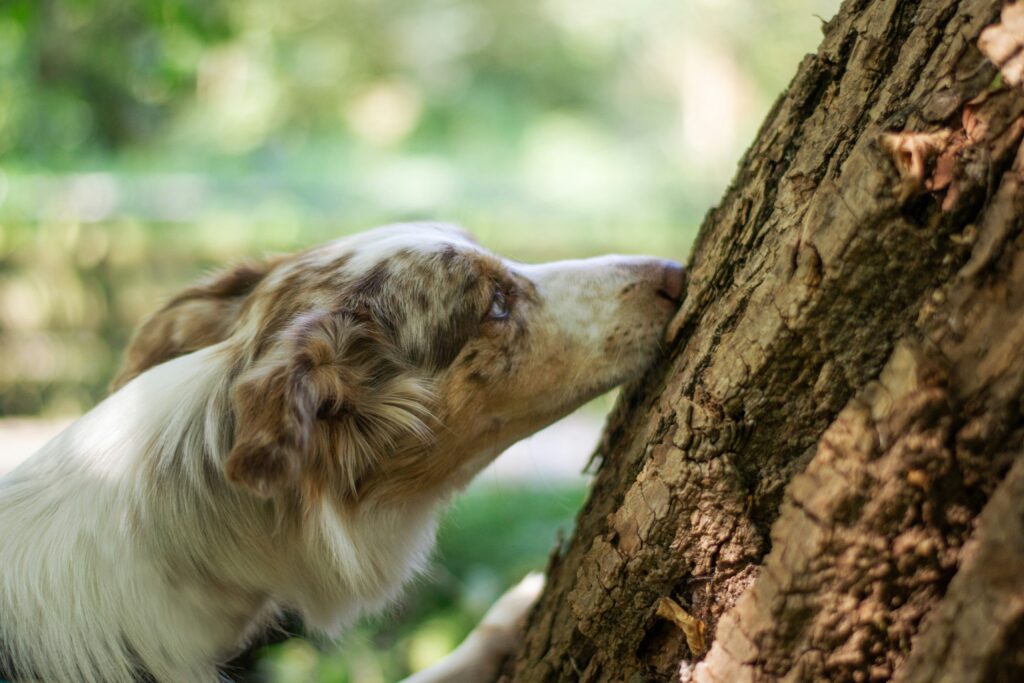
If you’ve ever felt impatient while your dog stops to sniff every lamp post, fire hydrant, and patch of grass on your walk, you’re not alone. But what looks like dawdling to us is actually your dog reading their daily newspaper, checking their social media feed, and leaving messages for friends—all through their incredible sense of smell.
The Extraordinary Canine Nose
Dogs don’t just smell better than humans; they experience the world through scent in a way we can barely comprehend. While humans have roughly 6 million olfactory receptors, dogs have up to 300 million, depending on the breed. The part of a dog’s brain devoted to analyzing smells is proportionally 40 times larger than ours.
To put this in perspective, if you could smell a teaspoon of sugar in your coffee, your dog could detect that same teaspoon of sugar in two Olympic-sized swimming pools. This isn’t just a better version of what we experience—it’s an entirely different sensory reality.
Dogs also possess a special organ called the vomeronasal organ (or Jacobson’s organ) located in the roof of their mouth. This remarkable structure allows them to detect pheromones and other chemical signals that provide information about other animals’ emotional states, reproductive status, and individual identity.
Why Sniffing Isn’t Optional—It’s Essential
For dogs, sniffing serves several critical functions:
Information Gathering: Every surface, object, and patch of ground tells a story. A single sniff can reveal which dogs passed by recently, their sex, age, health status, diet, emotional state, and even whether they’re familiar or a stranger.
Mental Stimulation: The canine brain is wired to seek out and process scent information. Sniffing activates the seeking system in your dog’s brain, releasing dopamine and creating feelings of satisfaction and engagement. Just 15-20 minutes of concentrated sniffing can be as mentally tiring as an hour of physical exercise.
Stress Relief: The act of sniffing activates the parasympathetic nervous system, which helps calm and regulate your dog’s emotional state. When dogs are anxious or overstimulated, sniffing behavior often increases as they attempt to self-soothe and gather information about their environment.
Environmental Awareness: Sniffing helps dogs build a mental map of their territory and stay informed about changes in their environment. This is especially important for dogs’ sense of security and confidence.
The “Pee-Mail” System: How Dogs Identify Each Other Through Urine
When your dog sniffs another dog’s urine, they’re not just smelling waste—they’re reading a complex chemical profile that’s as unique as a fingerprint. Here’s what makes this possible:
Chemical Signatures: Dog urine contains a cocktail of volatile organic compounds, hormones, and pheromones that create an individual scent signature. This signature is influenced by genetics, diet, health status, reproductive hormones, and even gut bacteria. No two dogs smell exactly alike.
The Information Highway: Through urine marking, dogs can determine:
- The individual identity of the dog (have we met before?)
- Their sex and reproductive status
- Approximate age and size
- Health status and diet
- Stress levels or emotional state
- How recently they passed by (scent degrades over time)
- Social status or confidence level
Memory and Recognition: Studies have shown that dogs can remember individual scent signatures for years. Your dog isn’t just smelling; they’re accessing a scent-based memory bank to recognize old friends, identify rivals, and track family members.
Strategic Marking: Male and female dogs both mark, though the behavior looks different. Males typically mark in short, frequent bursts at vertical surfaces (the classic leg lift), while females may squat-mark or kick backward to spread scent. Both sexes are strategically placing their calling cards in high-traffic areas where other dogs are most likely to encounter them.
The Social Network You Can’t See
Think of the neighborhood as a complex social network where scent posts function like status updates. When your dog sniffs a tree, they might learn that three dogs passed by this morning: the spaniel from down the street (female, anxious, walked by two hours ago), an unfamiliar terrier (male, confident, marked over other scents—assertive behavior), and that golden retriever they met last week (excited, recently ate something interesting).
Your dog can even detect directionality—the pattern of scent helps them determine which direction another dog was traveling. This is why dogs often follow scent trails with such determination.
Why You Should Let Them Sniff
Understanding the complexity of canine olfaction reveals why sniffing is so much more than a biological quirk—it’s a fundamental need. When we constantly pull our dogs along on walks without allowing adequate sniffing time, we’re essentially forcing them through their world with their primary sense shut off.
Consider incorporating dedicated “sniff walks” into your routine, where the goal isn’t distance or speed but allowing your dog to engage fully with their environment. The mental enrichment, stress relief, and satisfaction this provides cannot be overstated. A dog who’s been allowed to sniff thoroughly is often calmer, more settled, and better able to focus on training or other activities.
The next time your dog pauses to thoroughly investigate a seemingly unremarkable spot on the sidewalk, remember: they’re not stalling or being stubborn. They’re reading the news, checking their messages, and experiencing their world the way nature designed them to. That patience you extend to let them sniff isn’t just kindness—it’s respect for who they fundamentally are.



Leave a Reply